
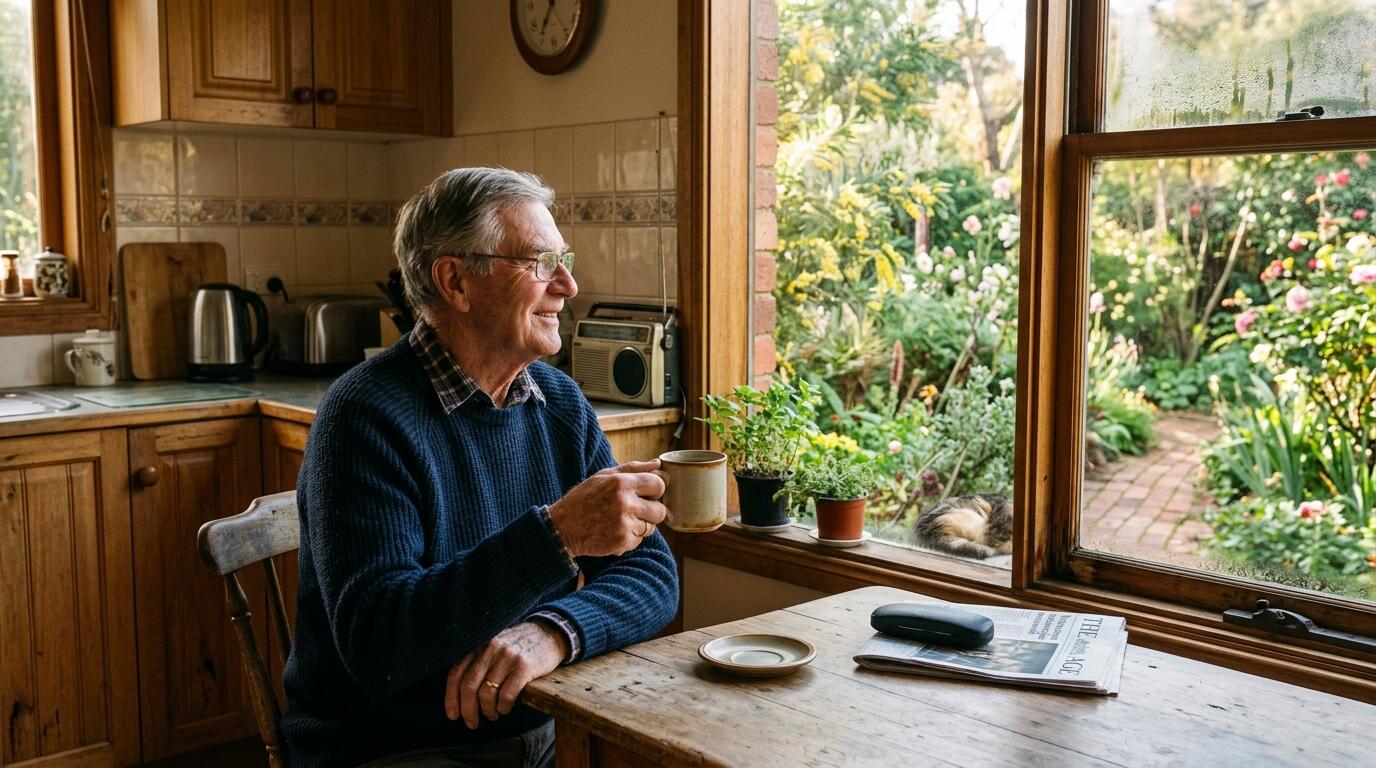
There's an assumption baked into almost every product designed for aging parents: the family needs to see what's happening.
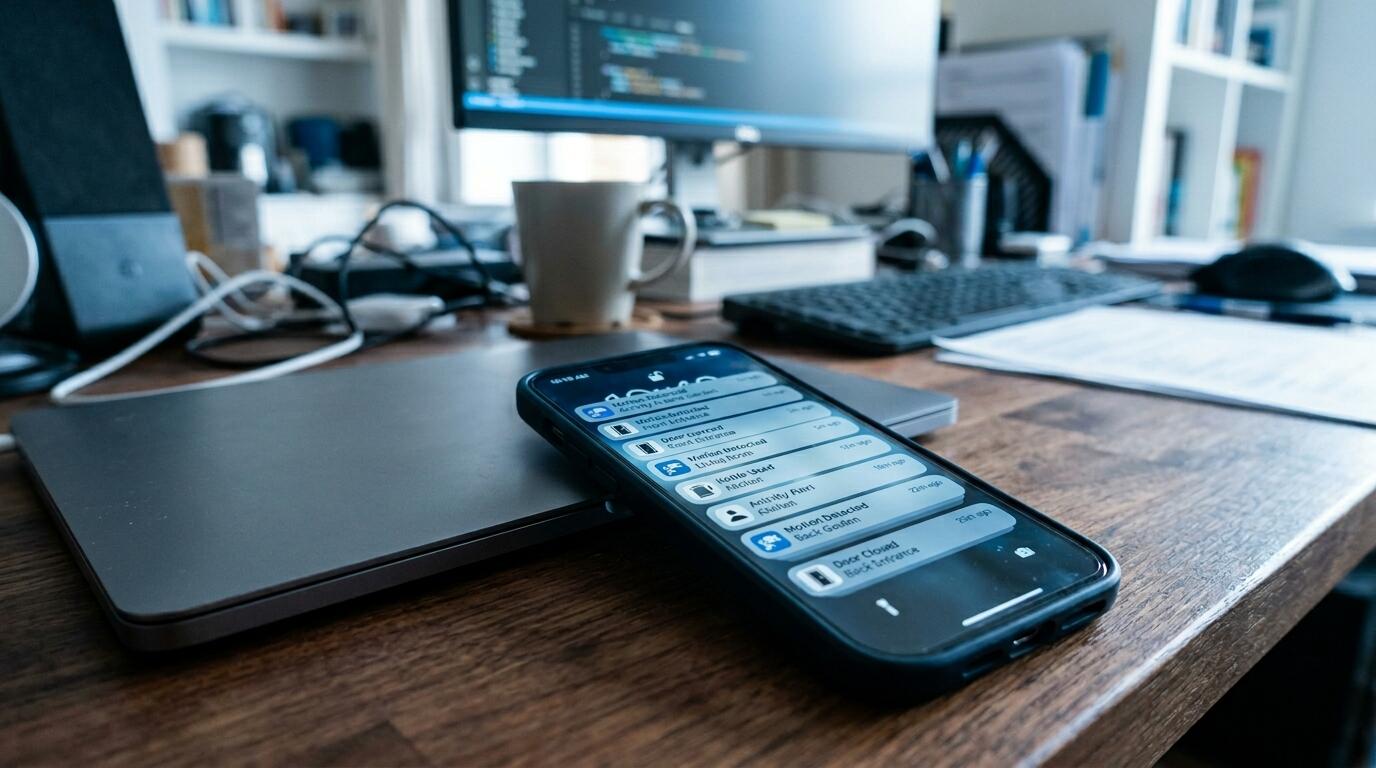
Cameras let you watch. Activity trackers let you see when they last moved. Smart home apps show you whether the kettle was used this morning. Check-in apps and services require your parent to confirm they're OK every day, whether by tapping a button in an app or replying to a text message.
These products are designed for you, the adult child who worries. And they solve your problem (the worry) by creating a new one for your parent (the feeling of being watched). If you're evaluating the practical options, we've written a detailed comparison of everything available covering pendants, cameras, daily calls, home care, and passive sensors.
But before comparing features, it's worth stepping back and asking a more fundamental question. Instead of giving the family a window into someone's daily life, what if you gave the person living alone a safety net they control? One where the family only hears from the system when something actually seems wrong?
That's not a small distinction. It changes who the product is for, how it feels to live with, and ultimately whether it stays plugged in long enough to matter.
What Monitoring Really Means
Monitoring means ongoing visibility. It means someone, usually the adult child, has access to information about their parent's daily life. How much they moved, when they got up, whether they used the kitchen, where they went.
The intent is good. The effect is less clear.
When you know your parent's routine, you start interpreting it. She usually makes tea by 8. It's 8:30 and the kettle hasn't been used. Should I call? This creates a new kind of anxiety, not the deep worry about an emergency, but a constant low-grade alertness that's exhausting for you and suffocating for them.
Your parent, meanwhile, knows they're being watched. Maybe they don't mind at first. But over weeks and months, it changes the texture of living alone. The independence that mattered to them, choosing when to eat, when to sleep, when to sit in the garden doing nothing, now feels observed.
And there's a practical problem: monitoring fatigue. When you get data every day, you stop paying attention to it. The dashboard that felt urgent in week one is background noise by month three. If a real pattern emerges, a gradual decline in movement, a change in routine that signals depression, it's easy to miss in the noise of daily data.
What a Safety Net Does Differently
A safety net has a fundamentally different design philosophy: stay invisible until something's wrong.
No daily data. No activity feeds. No dashboards for the family to check. The system runs quietly in the background, and as long as everything is normal, nobody hears from it.
When the system detects that expected movement has stopped during the hours when your parent is normally active, it doesn't call you first. It reaches out to your parent. A text message. A phone call. "Everything OK? Just reply and we'll reset."
If your parent responds, they were napping, they went to the neighbours, they were in the garden, the system resets and you never even know it happened. No false alarm. No anxious phone call from you interrupting their afternoon.
If they can't respond, because they've fallen, they're unwell, or something is genuinely wrong, then their trusted contacts get a call. You hear from the system for the first time, and it means something.
This design choice matters for two reasons:
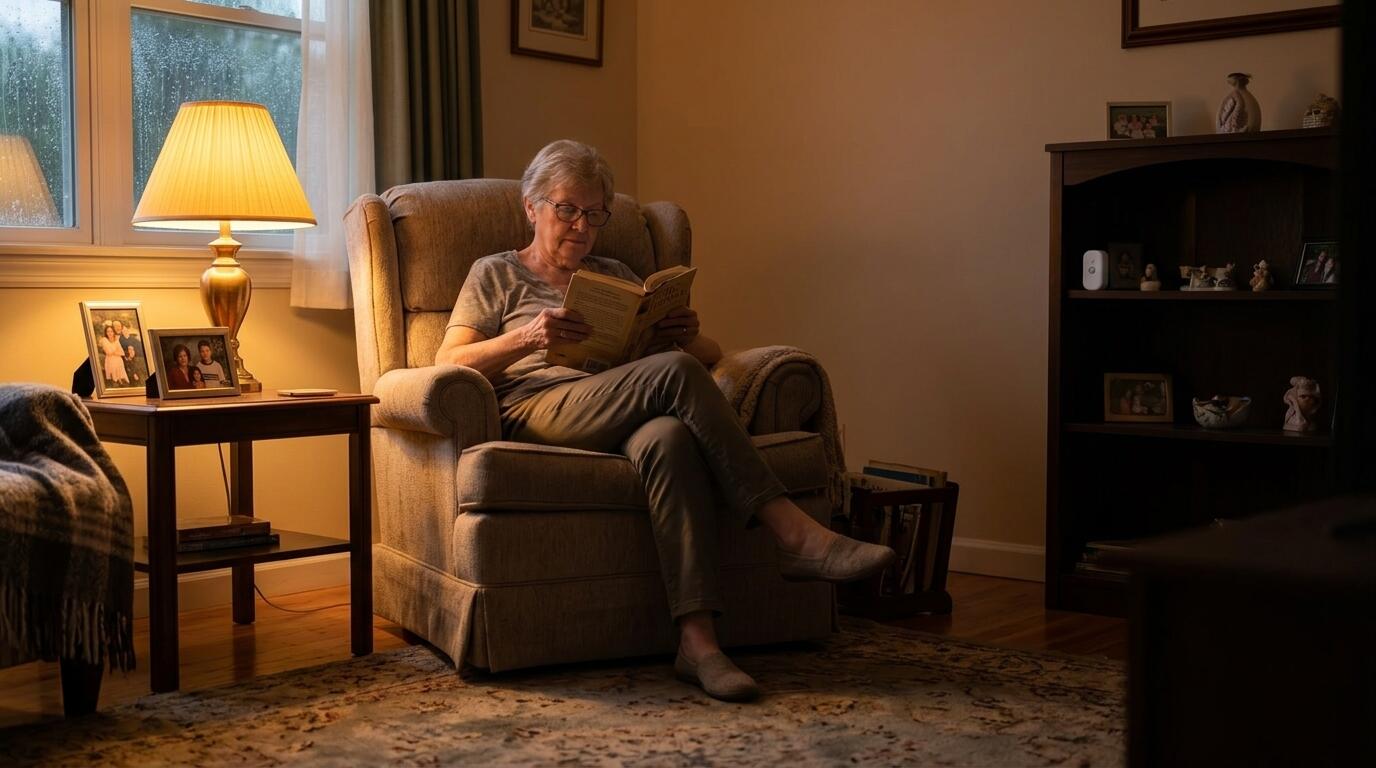
For your parent: They're not being watched. They don't have to prove they're alive every morning. They don't have to perform independence for a camera or an app. They live their life exactly as they did before, but with a background safety net that they know is there.
For you: When the system contacts you, it carries real weight. It's not a notification in a sea of notifications. It's not a data point you have to interpret. It's a clear signal: something may be wrong, and your parent couldn't respond when we checked.
Why This Matters Long-Term
The biggest risk with any safety system isn't that it fails technically. It's that it stops being used.
Pendants get left in drawers. Cameras get unplugged. Check-in apps get dismissed as annoying. Smart home sensors lose their Wi-Fi connection and nobody notices for months.
Every one of these failures happens because the system asked the parent to do something they didn't want to do, or made them feel something they didn't want to feel.
A passive safety net avoids this by design. There's nothing to wear, nothing to press, nothing to charge, nothing to learn. The sensor sits in the home and the parent doesn't interact with it. There's nothing to resist, so there's nothing to abandon.
This is why we think about it as a safety net rather than a monitoring system. Monitoring is active. It requires attention, interpretation, and engagement from both sides. A safety net is passive. It does nothing until it's needed, and then it catches you. The data on falls in older Australians makes the stakes clear: the time between a fall and someone finding out is the single biggest factor in outcomes, and compliance failures in active systems widen that gap.
The Privacy Question
There's a deeper question here about what we owe our parents as they age.
It's easy to justify monitoring as "just being safe." But safety doesn't have to come at the cost of privacy. Most of us would be uncomfortable if someone tracked our movements, checked when we used our kitchen, or had a camera in our living room, even someone who loved us and meant well.
The fact that someone is older doesn't change their right to privacy. If anything, it makes it more important. When you're losing control over some aspects of your life, your body, your mobility, your memory, the parts you can still control become more precious. The decision to have a quiet cup of tea without anyone knowing, to sleep until 10am without triggering a welfare check, to sit in a chair and do nothing without a sensor flagging it as inactivity. Those are small dignities that add up to the difference between living at home and being housed at home.
Both Approaches Have a Place
This isn't about one approach being wrong and another being right. There are families where monitoring makes sense, where the parent wants their child to see their daily routine, where cognitive decline means the parent can't manage their own safety decisions, where the level of care needed goes beyond a passive system.
But for the large number of parents who are independent, capable, and clear about wanting to stay that way, a safety net is a better fit than monitoring. It respects the parent's autonomy. It reduces anxiety for the child without creating anxiety for the parent. And it stays in place because there's nothing about it to reject.
If your parent has already refused pendants or cameras, that refusal is actually a useful signal. It tells you they value their independence enough to reject solutions that threaten it. We've written about what to do when your parent refuses to be monitored, including how to reframe the conversation so they're part of the decision.
What We Built and Why
Puffin Guard is a single sensor. No cameras. No microphones. No wearables. It detects everyday movement in the home and runs quietly in the background.
If something seems wrong, it contacts your parent first. If they're fine, it resets silently. If they can't respond, it alerts their trusted contacts.
Your parent gets a dashboard they control. They can see the system's status, pause it when they travel, and manage it without your involvement. You don't get daily updates. You don't get an activity feed. You get a phone call if, and only if, something actually seems wrong.
Puffin Guard is a private safety net your loved one controls. No cameras, no wearables. Just quiet confidence that someone will know. See how it works →
I built it this way because I went through exactly this situation. My dad lives alone, hours away. He didn't want cameras. He didn't want a pendant. He just wanted to know that if something went wrong, someone would come. So I built him a safety net he'd actually accept, and then I built it for every family like ours.
That's a safety net. And it's a fundamentally different product from a monitoring system, even though both come from the same place of love.
Puffin Guard is a private safety net for people living independently. One sensor. No cameras. No wearables. Learn how it works.