
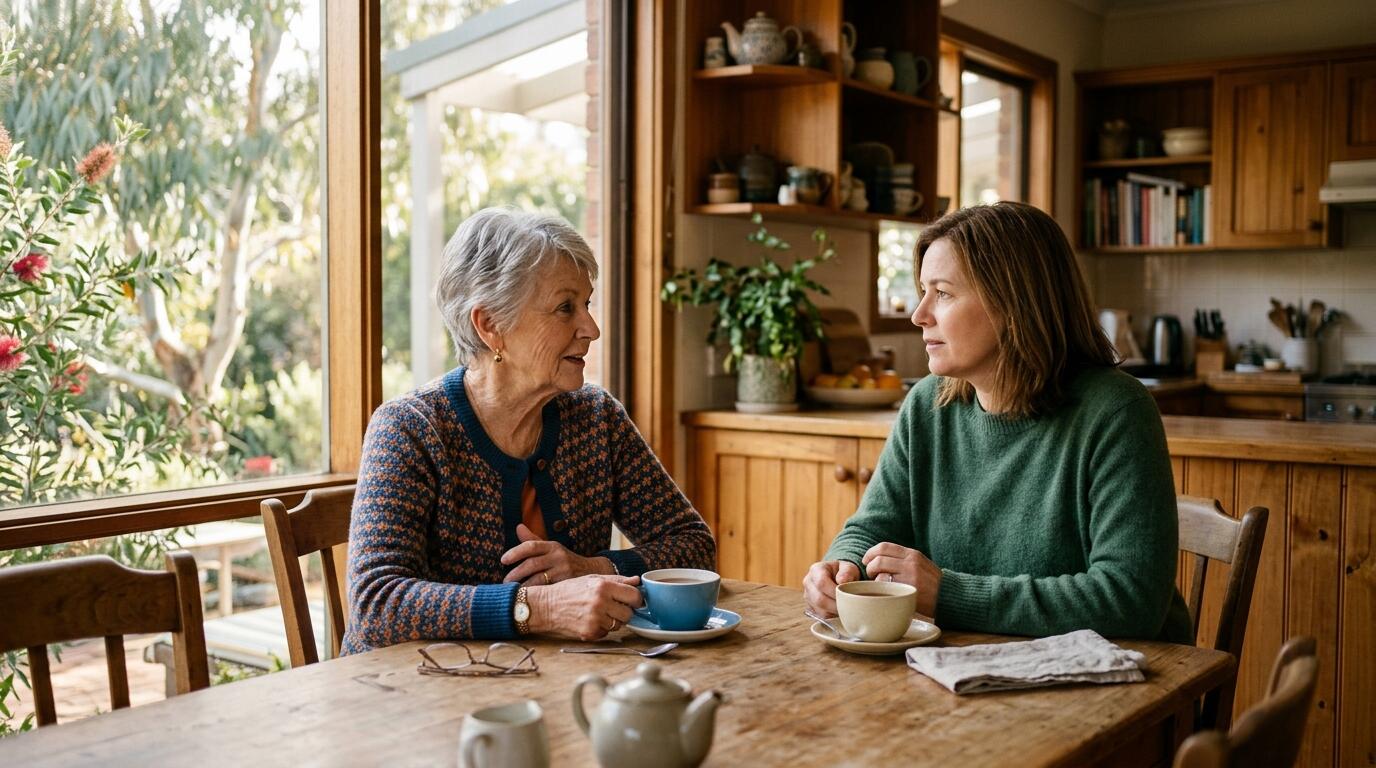
You've had the conversation. Maybe more than once.
"Mum, what about one of those pendant things? Just in case?"
And she said no. Maybe she said it gently. Maybe she said it firmly. Either way, the answer was clear: I don't want to be monitored.
If you're reading this, you're probably the adult child who lies awake wondering what happens if something goes wrong and nobody knows. You're not imagining things. The worry is reasonable. But so is your parent's refusal.
Here's why they say no, what you can do about it, and what we learned building a product for exactly this situation.
Why They Say No
It helps to understand what your parent is really refusing. It's rarely the safety part. It's the loss of control.
Pendants feel medical. Wearing a device around your neck is a daily reminder that someone thinks you might fall. For a parent who still drives, cooks, and manages their own life, that feels like being treated as fragile.
Cameras feel invasive. Even if you promise you'll only check the footage in an emergency, your parent knows the camera is always there. The feeling of being watched changes how you live in your own home.
Daily check-in calls feel like reporting. When your parent has to confirm they're alive every morning, it shifts the relationship. You become the person who checks up on them, not the person who calls because you want to.
Smart home devices feel complicated. Smart plugs, motion-tracking apps, wearable step counters. They all require your parent to learn something new, charge something, or change their routine. Many older adults simply won't.
The refusal isn't stubbornness. It's a parent saying: I want to keep living my life on my own terms.
What They're Actually Saying Yes To
Here's the thing most families miss: when a parent refuses monitoring, they're not refusing safety. They're refusing a specific kind of safety, the kind that comes with surveillance, dependence, or loss of dignity.
Most parents would happily accept a safety net that:
- Doesn't change their routine. Nothing to wear, press, charge, or learn.
- Doesn't make them feel watched. No cameras, no activity feeds, no daily reports to their children.
- Gives them control. They manage it, not you.
- Only activates when something's actually wrong. No daily check-ins, no "are you alive?" pings.
The gap isn't between "safe" and "unsafe." It's between what the family wants (visibility) and what the parent wants (autonomy). The solution is something that gives you peace of mind without taking away their independence.
If you're looking for a detailed comparison of all the options (daily calls, pendants, cameras, smart home devices, professional care visits, and passive sensors), we've written a thorough guide: How to Check on an Elderly Parent Who Lives Alone. It covers the pros, cons, and realistic verdict for each.
What Actually Matters
The best safety solution is one your parent will actually accept. A camera they unplug, a pendant they leave in a drawer, or a check-in app they ignore is worse than useless. It gives you false confidence.
When you're evaluating options, ask yourself:
- Does my parent have to change their routine? If yes, they probably won't sustain it.
- Does it require them to do something when they're in trouble? If yes, it fails when they need it most.
- Will it make them feel watched? If yes, it'll damage the relationship before it helps.
- Can they control it themselves? If not, you've taken away their autonomy, which is what they were trying to protect.
This is why we think the distinction between monitoring and a safety net matters so much. Monitoring solves your anxiety by creating a new problem for your parent. A safety net solves both.
The Conversation That Works Better
Instead of asking your parent to accept monitoring, try framing it differently:
"I'm not trying to keep tabs on you. I know you're fine. But if something ever happened, a fall, feeling unwell, I want to know about it quickly, not find out days later. Is there something we could set up that you'd be comfortable with?"
Notice what this does:
- It respects their competence. You're not saying they need help. You're saying you want a backup plan.
- It's about you, not them. "I want to know" is different from "you need to be monitored."
- It gives them the choice. They're not being told what to accept. They're being invited to solve the problem with you.
Let them be part of the decision. If they choose a pendant, great. If they choose daily calls, great. If they want something that doesn't change their life at all, that's where a passive safety net fits.
The goal isn't to monitor your parent. It's to make sure that if something goes wrong, someone comes, and they know it. If you'd like more detail on navigating this conversation, we've written a full guide to having the safety conversation.
What a Passive Safety Net Looks Like
Puffin Guard is what we built because we couldn't find anything else that solved the actual problem. It's a single sensor. No cameras, no microphones, no wearables. It detects everyday movement in the home and runs quietly in the background.
If it doesn't detect expected movement, it reaches out to your parent first (via text and phone call). If they respond, they were napping, in the garden, at the shops, everything resets, and you never even know it happened. If they can't respond, their trusted contacts get a call.
Your parent controls the system. They can pause it when they go on holiday. They change the settings on the web dashboard. They're not being watched. They have a safety net they chose.
No buttons to press. No devices to wear. Nothing to refuse.
One Last Thing
A family shared this story with us. Their father had a fall watch. He got up in the middle of the night to go to the toilet, fell between his bed and the wall, and wasn't found for days. He was alive, but his watch was on the bedside table charging — it was doing its job during the day, but it couldn't help overnight.
That's the gap a passive safety net fills. Not a replacement for a watch or pendant, but a background layer that covers the times they can't. Just the quiet confidence that someone will know.
Puffin Guard is a private safety net for people living independently. One sensor, no cameras, no wearables. Learn how it works.