
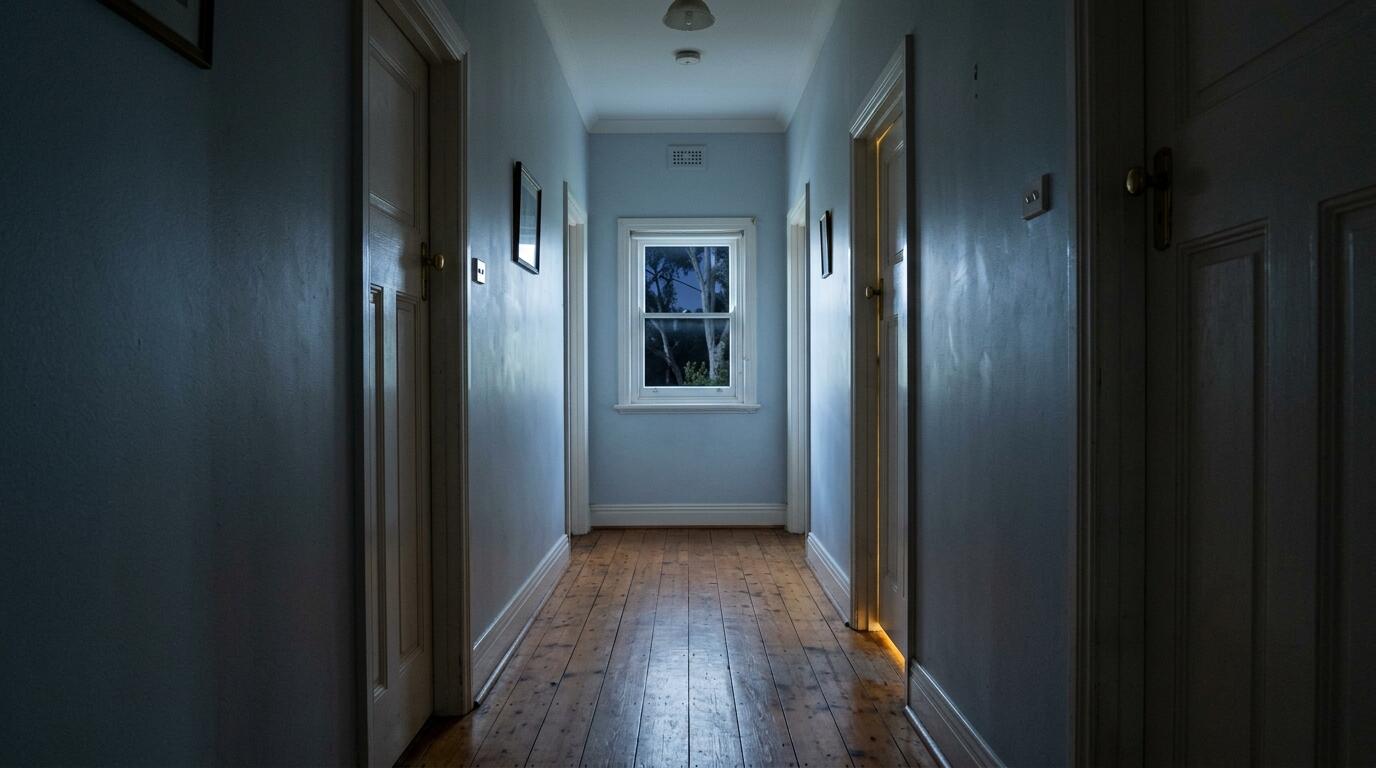
There's a term used in geriatric medicine that most families never hear until it's too late: the long lie. It refers to a person remaining on the floor for an extended period after a fall, unable to get up and unable to call for help.
It's not the fall that does the most damage. It's the time.
What a Long Lie Actually Looks Like
Your parent trips on the way to the bathroom at 2am. They land on their hip. It hurts, but they're conscious. They try to get up. They can't. The floor is cold. They call out, but nobody hears them because they live alone.
By morning, they're dehydrated. By afternoon, their muscles are breaking down from the pressure of lying in one position. By the following day, if nobody has come, they may be hypothermic, confused, or in kidney failure.
This isn't a worst-case scenario. It's a well-documented medical pattern. In Australia, falls are a major cause of injury hospitalisation for people over 65, and a long lie after a fall is associated with complications that get worse the longer someone remains on the floor.
Why Time Changes Everything
A fall with help arriving within an hour is usually a bruise, maybe a fracture. The same fall with help arriving 12 or 24 hours later can become:
Dehydration. Without access to water, dehydration sets in within hours. For an older person, this can quickly lead to confusion, low blood pressure, and organ stress.
Hypothermia. Lying on a cold floor, especially overnight, drops body temperature. Older adults lose body heat faster and are less able to regulate temperature. Even in a mild Australian winter, a night on a tile or wooden floor can cause dangerous hypothermia.
Rhabdomyolysis. When muscles are compressed for extended periods (from lying in one position), muscle tissue begins to break down and release proteins into the bloodstream. This can cause acute kidney failure. It's one of the most serious consequences of a long lie and one of the least understood by families.
Pressure injuries. Skin breaks down surprisingly quickly under sustained pressure, especially on bony areas like hips, shoulders, and heels. What starts as redness can become an open wound within hours.
Psychological trauma. This is the one that doesn't show up in hospital records. The experience of lying on a floor, alone, unable to move, not knowing if anyone will come, leaves a lasting mark. Many older adults who survive a long lie develop acute anxiety, depression, or a fear of being alone that fundamentally changes their quality of life. Some never return to independent living, not because of the physical injury, but because of the psychological impact of those hours on the floor.
The Numbers
The AIHW's current falls data shows that people aged 65 and over are hospitalised for falls far more often than younger adults. But the statistic that matters most for families isn't how many people fall. It's how long they were on the floor.
Clinical literature commonly treats a long lie as remaining on the floor for more than an hour after a fall. A scoping review of the term notes complications such as dehydration, rhabdomyolysis, infection, pressure injuries, and hypothermia. The exact risk depends on the person, the injury, the floor surface, temperature, hydration, and how quickly help arrives.
The difference between a better outcome and a worse one is often about time to discovery.
Why Existing Solutions Don't Always Close the Gap
Medical alert pendants work if the person is wearing them and can press the button. But the moment they're most likely to fall (at night, in the bathroom, getting out of the shower) is also the moment they're least likely to have it on. And if they're unconscious or can't reach the button, it won't help.
Smartwatches with fall detection (Apple Watch, Galaxy Watch) are genuinely better. They can detect a hard fall and call emergency services within seconds, no button press needed. But they need daily charging. The 2am bathroom fall in our opening scenario? The watch may well be on the nightstand charging. They also miss slow falls, collapses, and non-fall emergencies like strokes. For the hours your parent is wearing one, nothing else comes close for response time. We've written a detailed comparison of smartwatch fall detection if you're considering this option.
Daily phone calls are a routine, not a safety net. If you call every morning at 9am, and your parent fell at 10pm the night before, that's 11 hours on the floor before anyone even starts to wonder.
Neighbours help when they're around. But they go on holiday, they have their own lives, and most aren't checking daily with the kind of reliability a safety net requires.
The common thread is this: every solution has gaps, and the gap is time. The question every family should ask is: if something happened right now, how many hours before someone would know?
If the answer makes you uncomfortable, the gap is too wide.
Closing the Time Gap
No single solution closes the gap completely. But the right combination can reduce it dramatically.
A smartwatch with fall detection gives you the fastest response during the day: seconds, not hours. If your parent will wear one consistently, it's the best immediate-response option available. The gap it can't cover is overnight (while charging) and the falls it doesn't detect.
A passive safety net like Puffin Guard approaches the problem differently. It's not an emergency response device and it's not a fall detector. It's a daily backup. A single sensor detects everyday movement. If expected movement isn't detected during your parent's normal hours, it reaches out to them first by text and phone call. If they respond, everything resets and you never know it happened. If they can't respond, their trusted contacts get a call.
It's not instant. With the default morning-and-evening schedule, the worst case is around 12-18 hours. A fall just after an evening check-in window might not be caught until the next morning. That overlaps with the 12-hour threshold cited above, and we won't pretend otherwise. But compared to no system at all, where the gap can stretch to two or three days before anyone notices, it's a significant reduction. Families who want a tighter window can add more check-in times to the schedule, bringing the worst case down further. And unlike a wearable, it works every night, requires nothing from your parent, and never needs charging.
The best approach for most families is both: a smartwatch for immediate fall response during the day, and a passive safety net as a daily backup for everything the watch can't cover: overnight, days when the watch isn't worn, and emergencies that don't look like a fall. Between the two, the gap shrinks dramatically.
Puffin Guard is a daily safety net, not an emergency response device. No cameras, no wearables, nothing to remember. It won't catch a fall in seconds, but it means someone finds out by the next morning, not days later. See how it works →
What You Can Do Today
If your parent lives alone, have a conversation about the time gap. Not about whether they might fall, they know that's possible. About what would happen in the hours afterwards.
Ask them: if you couldn't get to the phone, how long before someone would realise?
That question often lands differently from "would you wear a pendant?" It's not about what they need to do. It's about what happens if the current plan fails.
If the gap is more than a few hours, it's worth closing. How you close it, whether through more frequent visits, a neighbour arrangement, a smartwatch they'll wear consistently, a pendant they'll actually use, or a passive safety net, matters less than the fact that you close it.
The long lie is reducible. Not the fall itself, but the hours afterwards. Every hour you take off the gap improves the odds.
Sources: AIHW Injury in Australia: falls, Healthdirect falls advice, and the peer-reviewed scoping review Concept of the term long lie.
Puffin Guard is a private safety net for people living independently. One sensor, no cameras, no wearables. You only hear from us if something seems wrong. Learn more.